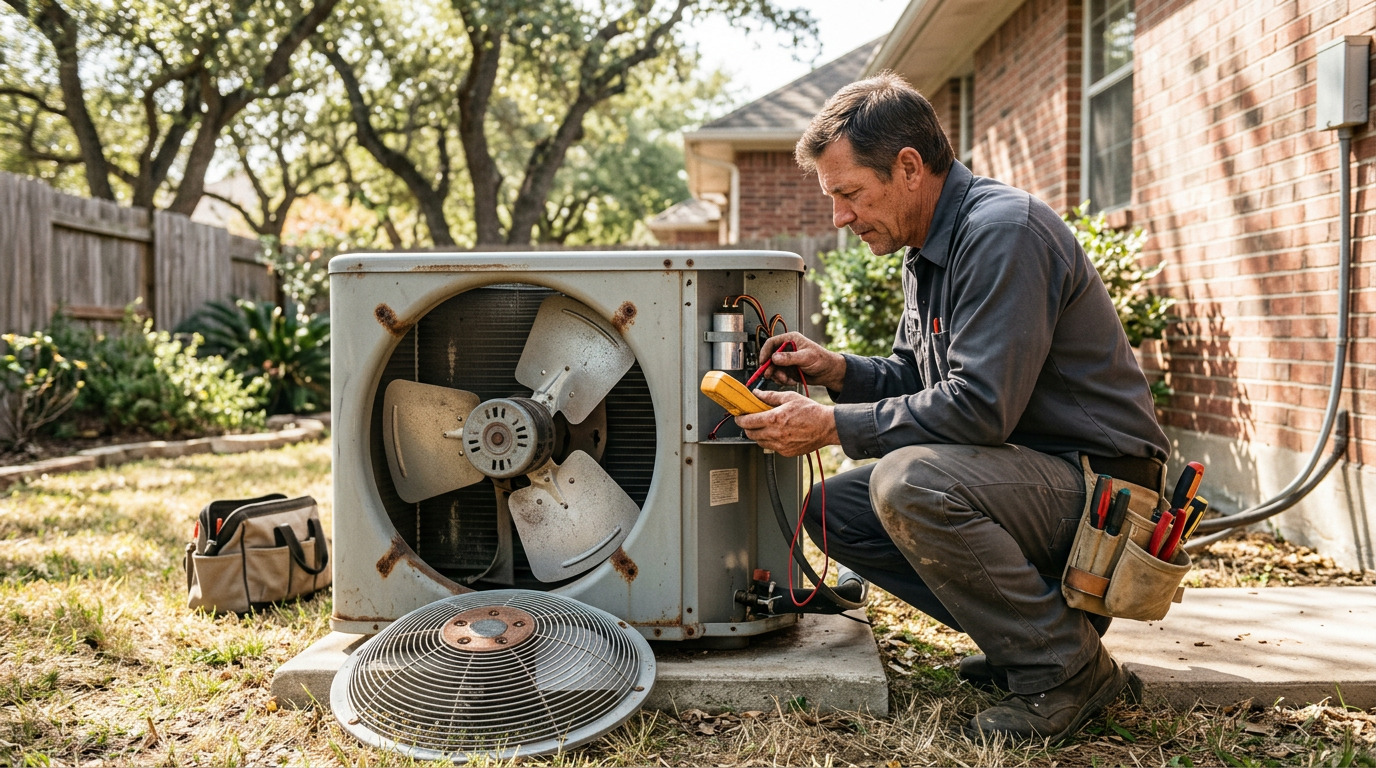
Reliable air conditioning is a must in San Antonio, Texas, where summer temperatures often push systems to their limits. At the heart of your AC’s operation is the condenser fan motor — a critical component for effective cooling. But when this motor burns out, it can lead to discomfort, costly repairs, and even damage to your entire system. Understanding why condenser fan motors fail and how to prevent problems can help you avoid an untimely AC breakdown.
What Does a Condenser Fan Motor Do in Your AC System?
The condenser fan motor is responsible for driving the fan in your outdoor AC unit. Its primary job is to move hot air out of your system by drawing it across the condenser coil, where heat from inside your home is expelled. This airflow is essential for maintaining normal refrigerant pressures and keeping the system operating efficiently.
Without proper airflow, your system can’t release the heat effectively, leading to higher operating temperatures, added strain on the AC compressor, and a noticeable dip in cooling performance. If the fan motor fails entirely, the outdoor unit may overheat, shutting the system down entirely or causing more serious mechanical damage.
Common Reasons Condenser Fan Motors Burn Out
Several factors can lead to premature burnout of a condenser fan motor. Below are the most common causes and how they affect your system.
1. Overheating From Excessive Operating Temperatures
Intense summer heat in San Antonio can increase the workload on your AC system. Continuous operation during these high-temperature periods can lead to the motor overheating, damaging its internal components over time.
Proper ventilation and preventive maintenance play a crucial role in reducing unnecessary thermal stress. Clearing debris around the outdoor unit and ensuring optimal airflow can help your condenser fan motor withstand the demanding cooling season.
2. Failing or Weak Capacitors
Many condenser fan motors rely on capacitors to start and maintain their operation. If the capacitor becomes weak or fails, the motor may struggle to start or stop running altogether. This extra strain can increase the risk of overheating and shorten the motor’s lifespan.
Signs of a failing capacitor include humming noises, delayed fan starts, or blades that seem to hesitate before spinning. Addressing capacitor issues quickly with professional HVAC service can prevent motor burnout.
3. Dirty Condenser Coils and Restricted Airflow
Dirty or blocked condenser coils can obstruct airflow, forcing the motor to work harder to move air through the system. While restricted airflow itself doesn’t directly cause burnout, the resulting additional stress contributes to overheating and inefficiency.
Clearing obstructions like leaves, branches, and outdoor debris from your condenser and scheduling regular coil cleanings can help the motor run more smoothly all season long.
4. Worn Bearings and Mechanical Problems
Over time, the motor’s bearings may become worn, leading to increased friction and heat during operation. Grinding, squealing, or rattling noises often point to worn bearing issues. Left unchecked, these mechanical problems can eventually seize up the motor and cause it to fail.
Routine maintenance can help catch and correct worn bearings before the damage becomes irreparable, extending the life of your condenser fan motor.
5. Electrical Problems and Voltage Issues
Loose connections, fried wiring, or voltage irregularities can interfere with the reliable operation of your condenser fan motor. These issues can cause overheating, damage motor windings, or prevent the fan from running entirely.
Because electrical repairs require professional knowledge and equipment, it’s best to leave troubleshooting and fixes to licensed HVAC technicians to avoid injury or further damage.
6. Aging Components and Lack of Preventive Maintenance
Like any mechanical part, the condenser fan motor wears down with age. Without regular inspections and maintenance, small issues like electrical faults or weakened components can go unnoticed until they escalate into costly failures.
Scheduling professional preventive maintenance gives technicians the chance to check your motor, capacitors, connectors, and other parts regularly, helping to avoid untimely breakdowns during critical summer months.
Warning Signs Your Condenser Fan Motor Is Failing
Recognizing early warning signs of a failing condenser fan motor can save you from expensive repairs later. Here are some symptoms to watch for:
- The Outdoor Fan Stops Spinning: A stationary fan during operation may indicate a motor issue, failed capacitor, or electrical disruption.
- Unusual Humming, Grinding, or Rattling Noises: Persistent noises often point to motor wear, electrical starting issues, or mechanical damage.
- Weak or Inconsistent Cooling: Reduced cooling could result from insufficient heat release at the condenser coil caused by fan malfunctions.
- Frequent System Shutdowns: Overheating or compressor protection mechanisms may shut down your system when the fan isn’t functioning properly.
- Unusually High Energy Bills: A failing fan motor can drive up energy consumption as the system compensates for reduced performance.
How a Failing Condenser Fan Motor Can Damage Your AC Compressor
If the condenser fan motor isn’t functioning, heat rejection at the condenser coil becomes ineffective. This causes refrigerant pressures and system temperatures to rise, placing significant strain on the compressor. Prolonged operation under these conditions can lead to premature compressor wear or failure — one of the most expensive components to repair or replace.
Turning off your cooling system at the first sign of fan motor trouble and contacting a professional HVAC technician can help prevent additional damage, safeguarding your system for the long term.
How to Prevent Condenser Fan Motor Burnout
Proactive maintenance is the best way to avoid major HVAC problems. These tips can help you prevent condenser fan motor burnout and ensure reliable cooling performance in San Antonio’s hot summers.
Schedule Regular HVAC Maintenance
Professional seasonal inspections ensure that potential motor, capacitor, and electrical problems are identified and resolved before they escalate. Trained technicians can also lubricate bearings, test capacitors, and optimize system performance.
Keep the Outdoor Condenser Area Clear
Ensure at least two feet of clearance around your condenser. Remove leaves, vegetation, and debris that can obstruct airflow to avoid unnecessary strain on your system.
Pay Attention to Unusual Performance
Address grinding noises, cooling inconsistencies, or frequent system shutdowns as soon as they occur. Early diagnosis often minimizes the risk of significant equipment damage.
Don’t Operate an AC System With a Failing Fan
If the fan isn’t spinning, turn off your AC and contact an HVAC professional immediately. Continued operation risks overheating or damaging other system components, including the compressor.
Invest in Professional Inspections
Rely on experienced technicians to diagnose motor burnout causes and perform lasting repairs. Proper service ensures related issues like electrical faults are not left unaddressed, preventing recurring problems.
Stay Comfortable All Year Long with Zero Heating A/C and Refrigeration
Whether you need HVAC repairs, maintenance, or a new system installation, our expert team is here to help. We proudly serve homes across San Antonio, Tx. with reliable, energy-efficient solutions.
📞 Click Here to Schedule a Call today at (210) 900-0824 or 📧 email info@zeroacr.com to schedule your service or get a free estimate. We proudly serve San Antonio, TX, homeowners with reliable solutions to keep your home comfortable in every season.
Recurring drain clogs are usually a system condition, not just a random housekeeping issue inside the pipe. If ac leak is already affecting comfort in University Heights / West Central, a timely inspection is usually the best way to protect cooling performance and limit how much extra strain lands on the rest of the system.