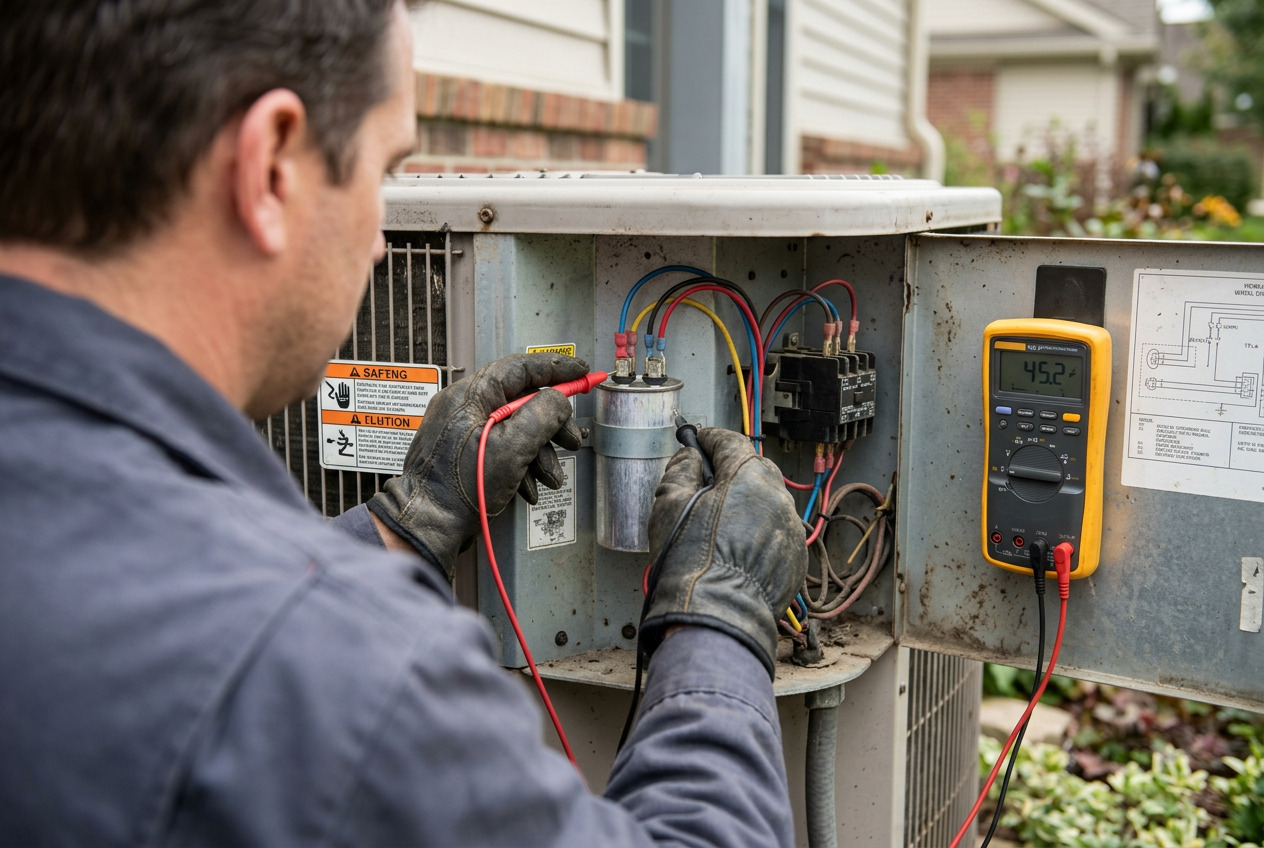
Your air conditioning system’s performance hinges on many components working together seamlessly. Yet, a small but vital part—the capacitor—often turns silent troublemaker, leaving homeowners and businesses grappling with unexpected breakdowns. Without a functional capacitor, even the most advanced air conditioning systems can’t deliver the cool, reliable comfort you rely on, especially during San Antonio’s scorching summers. Understanding this component’s role, why it fails, and the importance of professional care can save you from discomfort and costly HVAC interruptions.
What Is an AC Capacitor and Why Is It Important?
An air conditioning capacitor functions much like a battery, storing and delivering electrical energy to power essential HVAC motors. Your AC system has multiple motors, including those for the compressor, fan, and blower—each needing a boost to start and run efficiently. Capacitors come in two types:
- Start Capacitors: Provide the high voltage needed to kickstart the motor.
- Run Capacitors: Help keep motors running smoothly at an optimal speed during operation.
Without capacitors, these motors wouldn’t have the energy they need to start or continue running effectively. A failed capacitor means sluggish motor performance, leading to cooling issues or complete system failure.
Why AC Capacitors Fail Earlier Than Expected
Capacitors are designed for durability, but they are not immune to the stresses of continuous use and environmental conditions. Several factors contribute to their early failure:
1. Heat Exposure
San Antonio’s relentless summer heat puts capacitors under immense strain. High outdoor temperatures combined with frequent AC usage cause capacitors to overheat, reducing their lifespan.
2. Electrical Stress
Frequent voltage fluctuations or power surges can overwork capacitors. These electrical inconsistencies damage the delicate internal components, speeding up wear and tear.
3. Component Aging
Like all electrical parts, capacitors degrade over time. Electrolytic capacitors, commonly used in residential systems, have a limited charge cycle. Once they reach their capacity, they may fail unexpectedly.
4. Operating Conditions
Certain conditions, such as running the AC unit with clogged filters or insufficient refrigerant, force the system to work harder. This extra strain increases the load on capacitors, accelerating deterioration.
Warning Signs of a Failing Capacitor
Although your air conditioner may continue to operate with a failing capacitor for a short time, you’ll likely notice these warning signs:
- Humming or Clicking Noises: Failed capacitors often cause motors to emit a humming sound without starting properly.
- Difficulty Starting: If your AC struggles to turn on or takes longer than usual, the capacitor may be weakened.
- Intermittent Cooling: A bad capacitor can disrupt the motors’ consistency, leading to uneven or interrupted cooling.
- Unexpected Shutdowns: Your system might turn off abruptly during operation if the capacitor can no longer supply needed energy.
It’s important to note that these symptoms could also indicate other issues. A trained technician can diagnose the root cause accurately.
How Preventive HVAC Maintenance Helps Identify Capacitor Problems
Regular HVAC maintenance is key to catching capacitor issues before they lead to a system breakdown. During a professional inspection, experienced technicians:
- Conduct Electrical Testing: Using specialized tools, they measure capacitance levels and performance to ensure the part is working within its specifications.
- Inspect for Heat Damage: Technicians check for visible bulging, rust, or leaking fluid—clear signs of capacitor wear.
- Address Early Warnings: Identifying a weakening capacitor during maintenance allows for timely replacement.
Preventive care not only avoids sudden failures but also ensures smoother operation and longer system life.
When to Call an HVAC Professional for Capacitor Replacement
A failing capacitor is more than just an inconvenience—it’s a potential safety hazard. Capacitor replacement involves handling electrical components that can hold a dangerous charge if not properly discharged. For this reason, it’s essential to have certified HVAC professionals perform any replacements.
Ignoring electrical problems or attempting DIY fixes could cause further equipment damage or personal injury, turning a minor issue into a costly ordeal. A professional ensures accurate diagnosis, installs a compatible part, and verifies the system’s safe operation, giving you peace of mind.
Stay Comfortable All Year Long with Zero Heating A/C and Refrigeration
Whether you need HVAC repairs, maintenance, or a new system installation, our expert team is here to help. We proudly serve homes across San Antonio, Tx. with reliable, energy-efficient solutions.
📞 Click Here to Schedule a Call today at (210) 900-0824 or 📧 email info@zeroacr.com to schedule your service or get a free estimate. We proudly serve San Antonio, TX, homeowners with reliable solutions to keep your home comfortable in every season.
The earlier a weak startup component is found, the better the odds of keeping the repair limited and predictable. If ac not turning on is already affecting comfort in Stone Oak, a timely inspection is usually the best way to protect cooling performance and limit how much extra strain lands on the rest of the system.