When your AC unit suddenly stops working on a sweltering San Antonio afternoon, your comfort is the first thing to go. For many homeowners and businesses in the 78249 ZIP code, including the UTSA and Northwest Side area, AC failure can feel like an emergency. One unassuming yet critical component often behind such breakdowns is the contactor, a high-wear electrical switch that plays a pivotal role in keeping your air conditioner running. But what exactly does a contactor do, and why is it so prone to wear? Let’s explore this essential part, how it contributes to your AC system, and when you may need professional air conditioner repair near you.
What Does an AC Contactor Do?
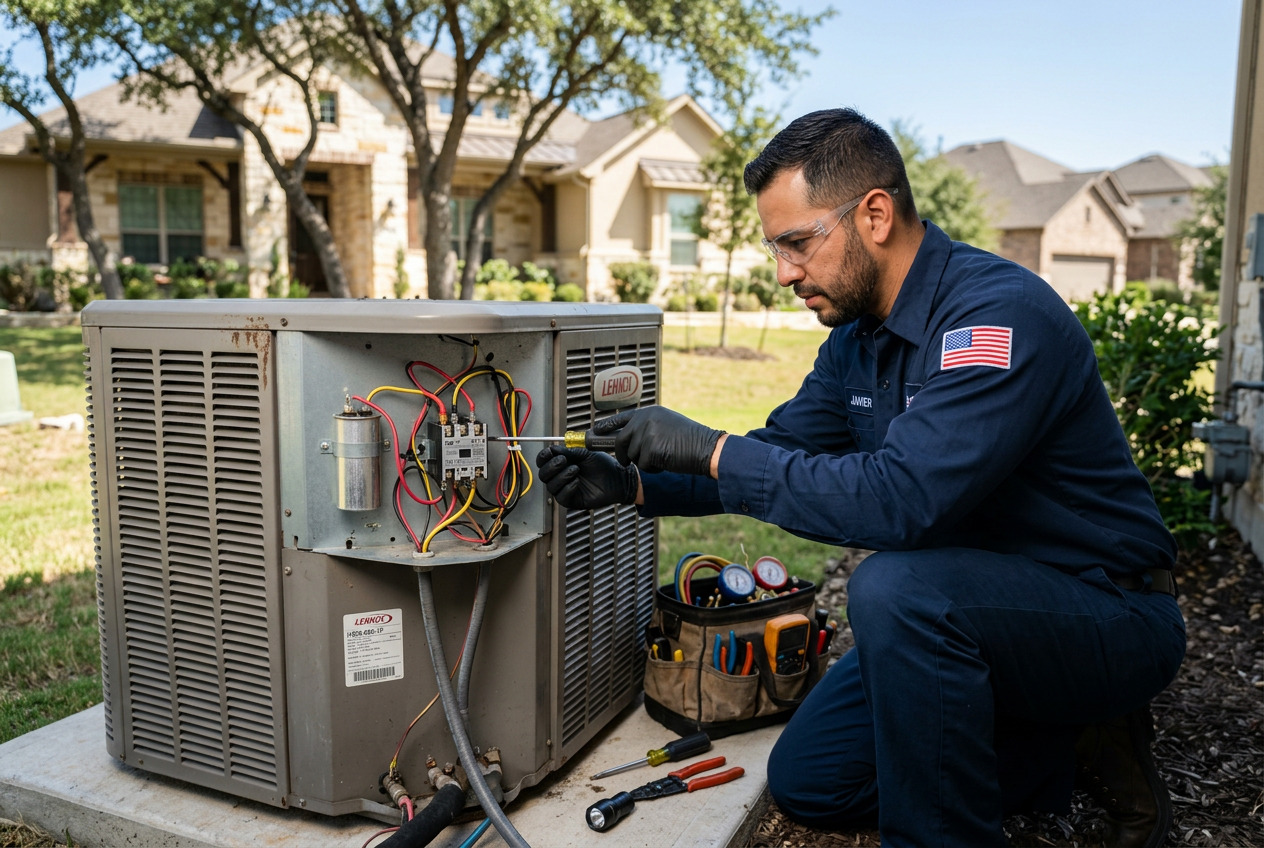
Simply put, the contactor serves as the “on-off switch” for your air conditioning system. When your thermostat signals the need to cool your space, the contactor closes its circuit, allowing electricity to flow to key components like the compressor and fan motor. This electrical connection is what powers your AC, enabling it to effectively cool your home or business.
Most AC contactors are designed to handle high electrical loads. However, because they open and close thousands of times over their lifespan, they are subject to frequent wear and, eventually, failure. For homeowners and small business owners in San Antonio, understanding this component’s role can help you troubleshoot why your AC unit might stop working and when professional intervention is necessary.
Why Does the Contactor Experience Frequent Wear?
The contactor is one of the hardest-working components in your air conditioning system. Here’s why it often wears out:
- Frequent Switching: Each time your thermostat signals a change, the contactor engages or disengages. This constant switching creates wear and tear on its internal parts.
- Electrical Arcing: When the contactor opens or closes, small arcs of electricity can form, causing erosion of the contact points over time.
- Heat and Dirt Accumulation: High temperatures, combined with dirt and debris inside the AC unit, contribute to faster degradation. Here in San Antonio, with our hot summers, these factors are particularly relevant.
These high-wear conditions make the contactor a common culprit behind an AC unit not working properly—or at all.
Common Signs of Contactor Failure
A faulty contactor can prevent the necessary electrical current from reaching critical parts of your AC system like the compressor, fan, or condenser. Here are practical warning signs homeowners in the 78249 ZIP code area can watch for:
- Unresponsive AC Unit
If your thermostat is set to cool but the outdoor AC unit doesn’t seem to be turning on, a worn-out contactor might be to blame. This is a common sign of electrical disruption. - Clicking or Humming Sounds
A failing contactor may emit unusual noises, such as clicking or humming, when it’s trying—and failing—to activate. - Intermittent Cooling
If your AC starts and stops erratically, the contactor may be struggling to maintain a steady electrical connection. - Burnt Smell or Visible Damage
Electrical arcing over time can cause the contactor to overheat. If you notice a burnt smell from your unit or see visibly burned components, it’s time for emergency AC repair.
If you’re noticing any of these issues, don’t delay. Ignoring these signs could lead to a complete breakdown and leave you stuck in the heat.
When to Call for Professional AC Repair
Replacing a contactor is not a DIY-friendly task. AC systems involve high-voltage electrical components, and attempting repairs without specialized training can be dangerous—not to mention costly if mistakes are made. For homeowners and small businesses on the Northwest Side of San Antonio, it’s always best to turn to a professional for safe and effective repairs.
Here are some situations where professional assistance is essential:
- Your AC has stopped working entirely. A non-functional system on a hot Texas day isn’t just uncomfortable; it could cause damage to sensitive internal components if left unresolved.
- You hear unusual noises or notice strange behaviors. Even subtle changes in your system’s performance can signal a looming electrical failure.
- You’ve recently experienced a power surge. Voltage spikes can damage sensitive parts like the contactor, even if they don’t cause immediate failure.
Skilled HVAC technicians can quickly diagnose and replace a damaged contactor, restoring reliable performance and preventing further damage to your system.
Preventing Future Contactor Issues
While wear and tear are inevitable, regular maintenance can extend the life of your contactor and minimize the risk of an unexpected breakdown. Scheduling annual or biannual AC tune-ups with a trusted service provider like Zero Heating A/C and Refrigeration ensures that components like the contactor are inspected, cleaned, and replaced if necessary before they cause major issues.
Additionally, if you notice any of the warning signs listed above—or if your AC unit isn’t working as efficiently as it used to—addressing the issue early could save you from needing emergency AC repair.
Stay Comfortable All Year Long with Zero Heating A/C and Refrigeration
Don’t sweat it—whether your AC unit has stopped working or you’re just trying to prevent future problems, our team has your back. At Zero Heating A/C and Refrigeration, we specialize in fast, reliable air conditioner repair near you. Serving the 78249 ZIP code and beyond, we’re your go-to experts for all things HVAC. 📞 Call us today at (210) 900-0824 or 📧 email info@zerohvacandrefrigeration.com to schedule your service or get a free estimate. Get your comfort back on track today!