When your air conditioning system struggles to keep your home cool during the sweltering San Antonio summer, you might find yourself wondering, “Why is my home AC not blowing cold air?” One potential culprit lies deep within your HVAC system—the evaporator coil. This essential component plays a critical role in the cooling process, and issues such as restricted airflow or leaks can severely impact its performance. Understanding the evaporator coil and its common problems can help homeowners and business owners in the 78232 ZIP code, especially in the Hollywood Park area, take timely action and maintain reliable cooling indoors.
The Role of the Evaporator Coil in Cooling
To understand why an evaporator coil is so important, we need to take a closer look at how your AC works. The evaporator coil is located inside or near your indoor air handler. Its primary job is to absorb heat from the air in your home while working in tandem with refrigerant to produce cool air. When warm indoor air moves over the coil, the refrigerant inside absorbs the heat, turning it into cooler air that gets circulated back into your living spaces. However, the coil relies on smooth, unrestricted airflow to function efficiently. When airflow is obstructed or a leak develops, the cooling process weakens significantly.
How Restricted Airflow Affects Your Evaporator Coil
Restricted airflow can develop from several causes, including dirty air filters, blocked vents, or issues with the blower fan. When air can’t flow freely over the coil, several problems may surface:
- Reduced Cooling Performance – With restricted airflow, the coil doesn’t efficiently absorb heat, leading to warm air blowing instead of the cool breeze you expect.
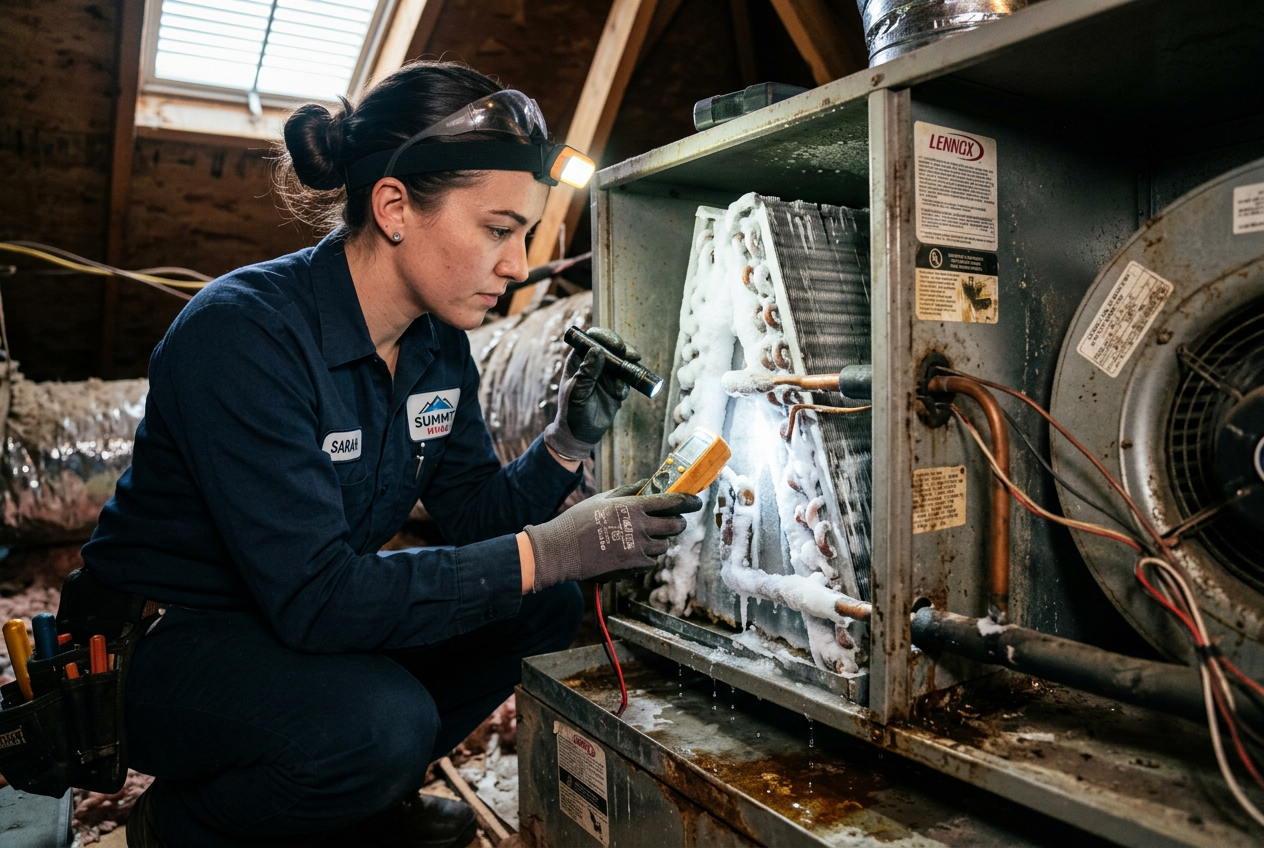
- Frozen Evaporator Coil – Limited airflow can cause the temperature of the refrigerant to drop too low, forming ice on the coil. This further disrupts cooling and may cause your system to shut down entirely.
- Higher Energy Bills – A struggling coil forces your system to work harder, using more energy and driving up your monthly utility costs.
If your AC isn’t cooling efficiently and you’ve noticed unequal temperatures or weaker airflow, restricted airflow to the evaporator coil could be the root cause.
What Happens When Your Air Conditioner is Leaking?
Another common issue with the evaporator coil is refrigerant leaks. If you’ve noticed an air conditioner leaking water or suspect an AC leak, it could point to a problem with the coil. Refrigerant leaks occur when cracks or corrosion develop on the coil’s surface, allowing refrigerant to escape. Here’s how these leaks impact your cooling:
- Poor Cooling Output – Without sufficient refrigerant, the evaporator coil can’t remove heat effectively. This results in lukewarm air blowing through your vents.
- Higher Utility Costs – A system low on refrigerant uses more energy to try (and fail) to cool your space, leading to increased energy bills.
- System Strain and Breakdowns – Left unaddressed, refrigerant leaks can strain the compressor and other critical components, causing more costly damage down the line.
If you spot puddles near your unit or suspect a refrigerant-related problem, it’s important to act quickly. Professional HVAC technicians can identify whether the coil is the source of the issue and perform the necessary repairs or replacements.
Signs of Evaporator Coil Problems
Knowing what to watch out for is key to protecting your HVAC system. Some common symptoms of evaporator coil problems include:
- Warm Air Blowing from Vents – If your AC is not cooling your home effectively, the coil may be compromised.
- Ice Buildup – Visible ice on your coil or refrigerant lines is a clear indication of restricted airflow or refrigerant leaks.
- Water Leaks – An air conditioner leaking water inside or near the unit often signals an issue with the coil.
- Higher Energy Bills – A sudden increase in your electricity costs could mean your system is working harder due to a faulty coil.
If your AC presents any of these symptoms, professional diagnosis is critical to avoid compounding damage.
Why Professional Diagnosis Matters
While evaporator coil issues are common, jumping to conclusions can lead to unnecessary repairs or system replacements. Instead, rely on a professional technician in San Antonio to assess and diagnose the problem accurately. A trained technician can:
- Inspect the System Thoroughly – From airflow analysis to refrigerant level checks, pros have the tools to identify the exact cause of your cooling issues.
- Prevent Further Damage – Prompt repairs help preserve your system and prevent minor faults from becoming expensive emergencies.
- Ensure Long-Term Efficiency – Expertly serviced evaporator coils allow your AC to run smoothly, saving you from further stress and expense.
Preventative Tips for Homeowners in San Antonio
Want to reduce the risk of evaporator coil issues? Here are a few simple preventative steps:
- Change Your Air Filters Regularly – Clogged filters hurt airflow, so change them every 1-3 months to maintain efficiency.
- Clean Your Vents and Registers – Keep your vents clear of dust and obstructions for better air circulation.
- Schedule Annual Maintenance – Annual tune-ups by a local HVAC professional ensure your system is operating its best and detect early signs of wear or leaks.
By staying proactive, you can avoid costly repairs and keep your AC running smooth during Texas heat waves.
Stay Comfortable All Year Long with Zero Heating A/C and Refrigeration
Experiencing evaporator coil problems or need maintenance for your HVAC system? Zero Heating A/C and Refrigeration is here to help. We proudly serve homes and businesses across San Antonio, TX, including the Hollywood Park area in ZIP code 78232, with reliable, energy-efficient solutions. Whether it’s repairs, regular tune-ups, or a new system installation, trust our expert team to deliver results.
📞 Call us today at (210) 900-0824 or 📧 email info@zerohvacandrefrigeration.com to schedule your service or get a free estimate!